5 Min Read
-1.jpg?width=960&height=480&name=1000x500%20featured%20image%20(2)-1.jpg)
If you've decided you want a custom home, then you know it's about way more than just building the house itself.
It involves making choices about the materials and finishes, the land, the layout, and lastly, financing. But financing a custom home is where many Georgetown homeowners miss some important details.
Unlike a production home with fixed selections and a predictable package price, the price of a design-build home hinges on the architecture, specifications, as well as construction. So having a good architect can make or break the project.
This guide shows you financing options for your custom home and the importance of having a qualified architect lead the construction.
Use the links below to go to the sections you want to read:
- Start With the Full Financial Picture
- Understanding the Most Common Loan Structures in Georgetown, TX
- Land, Plans, and Builder Relationship Matter
- Prepare for the Questions Lenders Will Ask
- Keep Selections Aligned With Financing
- Think Beyond Approval and Focus on Readiness
Start With the Full Financial Picture
When people are thinking about how to finance a custom home in Central Texas, they are often thinking only about the build itself. In reality, the budget usually includes more than vertical construction. Depending on the property, you may need to account for things like:
-
Land acquisition
-
Site preparation
-
Utilities
-
Septic and well work
-
Grading
-
Retaining walls
-
Driveway installation
In Georgetown, those variables matter. A beautiful homesite may come with slope, rock, tree protection requirements, or utility challenges that do not show up in a simple price-per-square-foot conversation. Before you ever apply for a construction loan, it helps to define the broader investment, not just the house. Homeowners who have not yet selected a property should carefully evaluate the neighborhood, land conditions, restrictions, and infrastructure before investing in a custom home.
That is where an architect-led design-build team provides real value. Early planning can identify scope, refine priorities, and help separate must-haves from nice-to-haves before you are deep into lender conversations. It is a lot easier to get financing when the project has already been shaped around real-world conditions.
Understanding the Most Common Loan Structures in Georgetown, TX
For most homeowners, the financing conversation comes down to two common paths: a standard construction loan or a construction-to-permanent loan. Both are designed to fund a custom home in phases as the work moves forward, but they differ in what happens once construction is complete. Choosing the right structure depends on how much flexibility you want, how streamlined you want the process to feel, and how you plan to transition into long-term financing.
Here is a side-by-side look at how the two options compare:
Table 1. Standard Construction Loan vs Construction-to-Permanent Loan
| Feature | Construction Loan | Construction-to-Permanent Loan |
|---|---|---|
| How It Works | Funds the build in stages during construction | Funds the build in stages, then converts into a mortgage after completion |
| Payments During Construction | Typically has interest only on funds already disbursed | Typically has interest only on funds already disbursed |
| After Construction | Requires a separate mortgage or refinance | Automatically becomes a long-term mortgage |
| Closings | Usually two closings | Usually one closing |
| Best Fit | More flexibility after construction | A smoother, more streamlined process |
For many custom home clients, the right choice is less about which loan is “better” and more about which one fits the project, timeline, and level of certainty in place from the start. If the design, scope, and budget are already well developed, a construction-to-permanent loan can offer a smoother path from planning to move-in.
If you need more flexibility later, a standalone construction loan may make more sense for you. Either way, the financing structure works best when it supports the architecture, the homesite, and the overall vision for the home rather than forcing those decisions after the fact.
Land, Plans, and Builder Relationship Matter
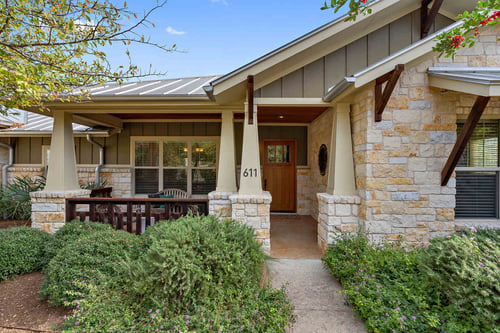
Custom homes are financed differently from resale homes because the lender is looking at more than just the buyer. They are also looking at the project itself. That makes the quality of the team and the detail of the plan especially important. Strong drawings, a clear construction agreement, realistic allowances, and a solid schedule all help the process move more smoothly.
This is also why build-on-your-lot financing matters as its own part of the conversation. Many homeowners already own their lot or are planning to buy one before the build begins. That can shape the financing in a big way. In some cases, land equity can help. In others, the lender’s requirements may shift based on where things stand with the property.
Making sure the architect and builder work together from the beginning can also make the project more straightforward and thus easier to finance. Design choices and other cost factors also get handled faster when your architect and builder are on the same page, making that relationship absolutely crucial for your project.
Prepare for the Questions Lenders Will Ask
One thing that often surprises homeowners is how detailed the financing conversation becomes once the project starts taking shape.
If you are pursuing a construction loan in Georgetown, expect questions that go beyond income, assets, and credit. Lenders will usually want to understand the status of the land, whether plans are complete, whether a builder has been selected, and how clearly the project has been priced.
They may also want to know if:
- You already own the lot or still need to purchase it
- The plans are complete or still being developed
- The construction agreement is in place
- The allowances and specifications are clearly defined
- The project includes features that may significantly affect cost
Working with a design-build team really pays off at this stage, as you will already have a detailed plan from your team to show to lenders.
Keep Selections Aligned With Financing
One of the quickest ways you can get a custom home budget off track is when you treat design and financing like two separate conversations. The most successful projects track each design choice within the context of the budget.
Keep in mind, a lender may approve a certain budget range, but that does not mean every finish and feature will fit neatly inside it. Cabinetry, windows, appliances, and flooring all add up, often faster than people expect. The same applies to exterior features. Thoughtfully designed patios, outdoor kitchens, pools, and covered living areas should be considered early so their cost is reflected in the project budget and financing plan.
That does not mean you need to scale back the vision or strip the home of what makes it special. It just means you need to make each decision with a clear sense of where the investment is going. A good design-build team can help you spend within your defined budget while still keeping true to your goals.
Think Beyond Approval and Focus on Readiness
A loan approval can feel like a green light, but in a custom home project, it is really just one part of the picture. The bigger question is whether the home is ready to move from idea to execution without unnecessary friction.
That usually means:
- The homesite has been looked at with a builder’s and architect’s eye, not just a buyer’s eye
- The plans have enough detail behind them to make pricing more dependable
- The team is working from the same set of expectations early on
- The budget is tied to the way the home will actually be built and lived in
- The loan setup supports the project instead of forcing it into a shape that does not fit
That kind of preparation does more than make the lender comfortable. It makes the project easier to manage once real decisions start stacking up. And in custom residential work, that kind of organization is worth a lot.
A Better Start Makes Financing Easier
Custom home financing gets much easier when the project is clear before it reaches the lender. In Georgetown, that means understanding the lot, the scope, and the layout early, before those details start creating delays or driving up costs.
If you are planning a custom home, this is the time to get the right team involved. A strong design-build process helps you move from ideas and inspiration to a project that is grounded, financeable, and ready to move forward.
Start With the Right Foundation. Start with J. Bryant Boyd.
The strongest custom homes start with more than inspiration. They start with a clear plan. At J. Bryant Boyd, we guide clients through the early decisions that shape the entire project, from the homesite and architectural vision to budgeting and buildability. Our design-build approach is built to create structure from the beginning, so your home feels considered at every stage, not pieced together along the way. With more than 30 years of experience designing and building custom homes in Central Texas, we are here to help you move forward with a home that is tailored to your life and grounded in expert planning.
Check out our Portfolio to see examples of what we can build for you.
Get your custom home started
Contact us to take the first steps in building your custom home.