6 Min Read
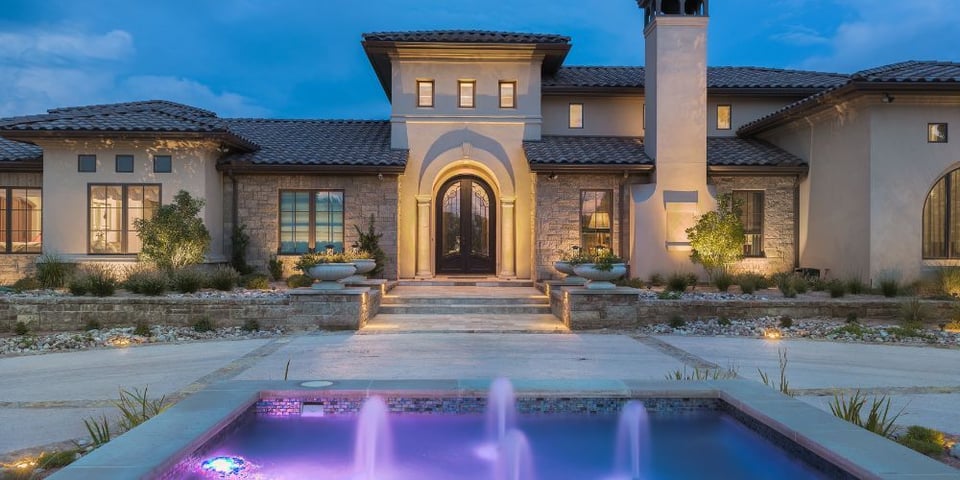
What do you think of when you hear "custom home?" Do you think of a spacious kitchen with an island or a spa-like bathroom with a garden tub? Regardless of the specific features you want, a custom home starts with the design. With the way the home sits on the lot, how the layout supports your daily life, and how the home lets you enjoy views of your land.
But a good design starts with finding a good architect. This guide will explore the importance of finding a qualified local architect and how it affects the quality of your custom home design.
- Why Choosing a Residential Architect in Georgetown Matters
- What Hill Country Custom Home Design Really Requires
- Start With the Land, Not Just the Floor Plan
- How an Architect-Led Process Improves Custom Home Design
- Using 3D Modeling and VR to Refine the Design Early
- Designing a Home That Feels Functional and Personal
- Why Site-Specific Design Matters in Georgetown and the Hill Country
- What to Expect From the Custom Home Design Process
Why Choosing a Residential Architect in Georgetown Matters
Georgetown is not a place where every lot asks for the same house.
Some properties open toward sweeping views. Others are shaped by mature trees, uneven grade, or a narrow approach from the road. In some neighborhoods, the home needs to make a strong first impression from the street. In others, privacy and rear-facing outdoor living may matter more than curb appeal alone.
A residential architect helps make sense of those conditions before they become expensive problems. That work is not limited to appearance. It affects how the home sits on the lot, how natural light enters the main rooms, where the best outdoor spaces belong, and how the layout works from one part of the day to the next. In some areas of Georgetown, additional design requirements and review processes may also influence architectural decisions long before construction begins.
What Hill Country Custom Home Design Really Requires
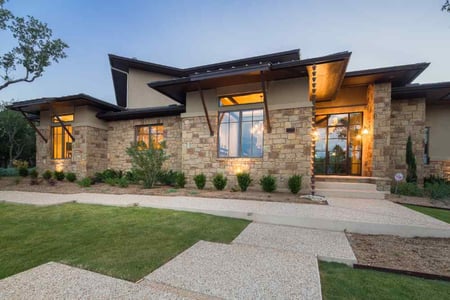
"Hill Country style” is often reduced to a few familiar materials: stone, wood, metal roofing, and large porches. But good Hill Country design is not a kit of parts. It has more to do with response than style.
In Georgetown and the surrounding area, custom homes often need to handle:
- Strong sunlight and heat
- Elevation changes
- Wide-open views
- A desire for shaded outdoor living
- A balance between regional character and modern function
That is why the strongest homes here usually feel settled rather than staged. They do not look imported. They look like they belong to the landscape, even when the architecture is clean-lined or contemporary.
Start With the Land, Not Just the Floor Plan
Many homeowners start with a list of rooms. That is understandable, but it can lead the process in the wrong direction. The land should have a voice early.
A sloped homesite may suggest a walkout lower level or a stepped foundation. A property with western exposure may need deeper overhangs and more careful window placement. A lot with a standout view may deserve a living area arranged around that one feature instead of a standard layout copied from another project.
Here are some of the property conditions that tend to shape design decisions from the beginning:
| Site Factor | Design Impact |
|---|---|
| View corridors | Can determine where the main living spaces and windows belong |
| Slope | Influences foundation type, massing, and access |
| Sun exposure | Shapes glazing strategy, comfort, and shade needs |
| Tree cover | Affects privacy, light levels, and outdoor room placement |
| Approach from the road | Helps define entry experience and curb presence |
How an Architect-Led Process Improves Custom Home Design
A custom home usually turns out better when the design process has clear leadership. When architecture drives the early decisions, the project has a better chance of staying on track from start to finish. That does not mean every detail is fixed upfront. It means the big moves are being made with intention instead of being patched together later.
An architect-led process often improves the project by helping keep these pieces together:
- The overall vision for the home
- How the house functions day to day
- What the site is asking for
- What can realistically be built
- How changes affect the whole design, not just one room
Without that kind of oversight, a project can start to drift. One decision gets made for budget, another for appearance, another for convenience, and before long, the home starts looking like three different homes in one. A strong architectural process helps prevent that.
Using 3D Modeling and VR to Refine the Design Early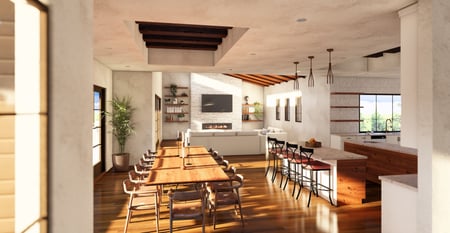
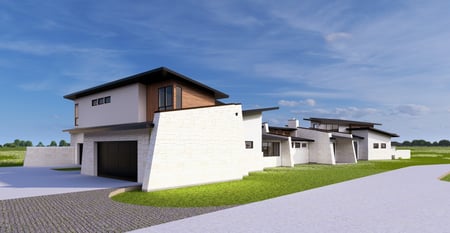
A floor plan can tell you where rooms go. It cannot always tell you how they will feel.
That is where design visualization becomes especially valuable. When homeowners can see the home more clearly before construction starts, they can ask better questions and make well-informed decisions.
For example, 3D modeling and walkthrough tools can help reveal whether:
- A ceiling height feels generous or awkward
- A hallway is doing too much work
- The kitchen feels connected to the main living space
- The windows are really capturing the best views
- The patio feels like an extension of the home or a separate zone
This kind of review is particularly helpful in custom home design because so much of the experience comes down to proportion, movement, and sightlines. Those things are harder to judge from flat drawings alone.
Designing a Home That Feels functional and personal
A custom home should not feel dated in five years, inconvenient in two, or generic the day it is finished. The best homes strike a balance between beauty and use. They have the style and flair of the homeowners while also reflecting the character of the surrounding neighborhood and land.
Custom homes that fit that description often have these things in common:
- Rooms sized for real living, not just visual impact
- Storage that is placed where people actually need it
- Layouts that support daily routines
- Materials feel durable and appropriate
- A consistent architectural footprint from room to room
Personal design is not about adding more features. It is about making better decisions about what matters most. Sometimes that means creating a stronger connection to the outdoors. Sometimes it means simplifying the floor plan so the best spaces can work best. Either way, the result should feel like a home shaped around the people living there, not just a trend cycle.
Why Site-Specific Design Matters in Georgetown and the Hill Country
Site-specific design sounds technical, but the idea is simple: the home should be shaped by the property.
In Georgetown and throughout the Hill Country, that can play out in many different ways. A house may stretch across the lot to follow the contours of the land. It may turn its major rooms toward a long western view while protecting them from harsh sun. It may preserve trees that give the property character from day one.
Here are a few examples of what site-specific thinking can influence:
| Site feature | Possible design response |
|---|---|
| Long-distance views | Orient living areas and outdoor spaces toward the strongest sightlines |
| Tree cover | Preserve shade, privacy, and a more established feel |
| Lot slope | Match the home with the terrain instead of forcing a flat solution |
| Neighbor proximity | Shape windows and courtyards for privacy |
| Sun exposure | Use roof overhangs, covered spaces, and smart window placement |
What to Expect From the Custom Home Design Process
For many homeowners, the process feels intimidating simply because they do not know what comes next. The good news is that custom home design should be straightforward and easy to track. Each phase has its own priorities.
Here is what the journey should look like:
-
Discovery is where the project gets clear about priorities.
This is the point where the homesite, lifestyle needs, goals, and constraints all start to come into focus.
-
Conceptual design is where the home takes its first real shape.
The floor plan, site response, and general architectural direction begin to emerge.
-
Design development is where the project gets sharper.
This is where layouts are refined, relationships between spaces improve, and details become more intentional.
-
Construction documentation is where the design becomes build-ready.
The plans and technical information are prepared for permitting and construction.
That structure helps homeowners make decisions in the right order. Instead of trying to solve every issue at once, they can focus on the questions that belong to each stage of the process. And that means less stress and friction during the actual construction, which is good for everyone involved.
A Well-Designed Home Begins Long Before Construction
The homes that feel most at home in the Hill Country usually have one thing in common: they were shaped with the land in mind from the very beginning. Instead of trying to make a pre-set plan work, they take cues from the property, the setting, and the people who will live there.
That is why working with a local residential architect matters. An architect who knows Georgetown can help you make sense of your homesite, see opportunities you might miss, and guide the design in a direction that feels both personal and right for the area. Find an architect who will listen to your goals and ideas and design a home that will feel as much a part of you as Texas itself.
Build a Home That Feels Right With J. Bryant Boyd
There is a difference between building a custom home and building one that truly fits. At J. Bryant Boyd, that fit comes from looking carefully at both the property and the people who will live there. The goal is not to apply a formula or force a style. It is to create a home that responds to the land, supports the way you live, and feels fully considered from the earliest design decisions through construction.
With more than 30 years of experience in Central Texas and the surrounding region, J. Bryant Boyd brings a design-build approach that keeps your project in one centralized team. Whether the project is a new custom home or a remodel, the focus stays on creating something personal and built to last.
If you are ready to start planning a home that feels rooted in the Hill Country and tailored to your life, J. Bryant Boyd is ready to help you begin.
Check out our Portfolio to see what we can build for you.
ready to get started?
Connect with our team to start building your custom home.