8 Min Read
/Jewel/Backyard%20view%20of%20a%20house%20with%20an%20illuminated%20pool%20and%20patio%20at%20dusk%20in%20central%20Texas.%20_%20J%20Bryant%20Boyd.jpg?width=960&height=540&name=Backyard%20view%20of%20a%20house%20with%20an%20illuminated%20pool%20and%20patio%20at%20dusk%20in%20central%20Texas.%20_%20J%20Bryant%20Boyd.jpg)
The Texas Hill Country has become a prime location for homeowners who want to build a custom home, and for good reason. The rustic landscape calls back to the state's frontier roots. Building a home here means you get to enjoy the lakeside views and acres of green pastures, but building a custom home starts with planning a budget you're comfortable with.
To help you with your budget planning, we've made this guide that covers what it costs to build a home here and the factors that can affect the price.
Use the links below to jump to the sections you want to read:
- How Much Does It Cost to Build a Custom Home in the Texas Hill Country?
- What Does the Cost Per Square Foot Include?
- How Much Does a Custom Home Cost at Different Sizes?
- Where Does the Money Go in a Custom Home Budget?
- What Site Costs Do Hill Country Lots Add?
- What Soft Costs Should You Plan For?
- How Long Does It Take to Build a Custom Home in the Hill Country?
- How Can You Keep Your Budget on Track?
- Key Takeaways
- Frequently Asked Questions About Building a Custom Home
- What Is the Next Step in Planning Your Hill Country Custom Home?
How Much Does It Cost to Build a Custom Home in the Texas Hill Country?
Fully custom home construction across Central Texas typically runs $250 to $400 per square foot, though design complexity and finish levels can affect the final cost. For a 3,000-square-foot home, that range works out to $750,000 to $1.2 million in construction costs. Land, site work, design fees, and permits come on top of that and commonly make up 35 to 40 percent of the total project budget.
Quick answer: Plan on $250 to $400 per square foot for construction, or $750,000 to $1.2 million for a 3,000 square foot home, before land and site costs.
Hill Country lots bring their own variables, including limestone, slope, and private wells and septic systems. Material and labor pricing can also shift before your build begins, so treat these ranges as planning figures until you have a project-specific estimate.
/Lake%20Georgetown/Modern%20kitchen%20area%20in%20Lake%20George%20Town%20%7C%20J%20Bryant%20Boyd.jpg?width=960&height=640&name=Modern%20kitchen%20area%20in%20Lake%20George%20Town%20%7C%20J%20Bryant%20Boyd.jpg)
What Does the Cost Per Square Foot Include?
When a builder quotes a price per square foot, that number describes the cost of constructing the house itself. Plenty of costs on a custom project fall outside it, so two homes with the same square footage can land at very different totals.
What's behind the numbers?
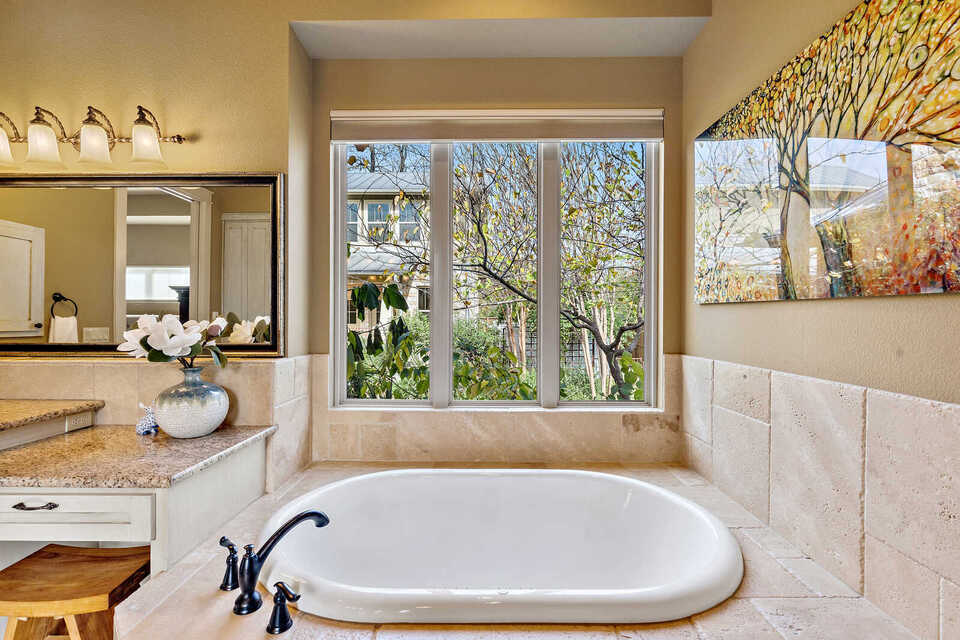
Take a 3,000-square-foot home at $300 per square foot, which comes to $900,000. That money builds the house from the ground up. The foundation goes in first, then the framing, roof, and exterior walls. The electrical and plumbing crews follow, along with HVAC (heating, ventilation, and air conditioning), and the last dollars go to what you'll touch every day: cabinetry, countertops, flooring, and fixtures. At the $1 million-plus level, that usually means upgraded cabinetry, natural stone or quartz surfaces, and windows built for Central Texas heat.
What Falls Outside the cost ranges?
Items like site work, utility connections, as well as architect's fees and permits will generally fall outside of your initial cost for design and construction. Pools, guest houses, and outdoor kitchens are priced separately as well, along with landscaping and furniture.
How Much Does a Custom Home Cost at Different Sizes?
Every square foot you add carries its share of the foundation, framing, finishes, and systems. Adding 500 square feet to a floor plan adds $125,000 to $200,000 in construction cost at the $250 to $400 range. Land, site work, design fees, and permits come on top of the figures below.
Table 1. Estimated Construction Cost by Home Size at $250 to $400 per Square Foot
| Home Size | Low Estimate ($250 per sq ft) | High Estimate ($400 per sq ft) |
|---|---|---|
| 2,500 sq ft | $625,000 | $1,000,000 |
| 3,000 sq ft | $750,000 | $1,200,000 |
| 3,500 sq ft | $875,000 | $1,400,000 |
| 4,000 sq ft | $1,000,000 | $1,600,000 |
Here is how this plays out on a $1.5 million total budget. If land, site work, design fees, and permits take 35 to 40 percent, construction receives $900,000 to $975,000. At a midpoint of $325 per square foot, that supports a home of roughly 2,800 to 3,000 square feet. A $1 million budget typically supports a home between 2,200 and 3,000 square feet once land, site work, and design fees are counted.
Where Does the Money Go in a Custom Home Budget?
Construction typically accounts for 60 to 65 percent of a custom home project, and the rest splits across land, design, permitting, and a contingency reserve. The working ranges below come from J. Bryant Boyd's decades of Hill Country building experience, and your lot and finish selections will move each share.
Table 2. Typical Share of a Hill Country Custom Home Budget
| Budget Category | Typical Share of the Project |
|---|---|
| Land and Site Work | 15 to 25% |
| Design and Architecture Fees | 8 to 12% |
| Structural Shell (foundation, framing, roof) | 25 to 30% |
| Finishes (cabinetry, countertops, flooring, fixtures) | 20 to 25% |
| Systems (HVAC, electrical, plumbing) | 10 to 15% |
| Permits and Contingency | 5 to 10% |
On a $1.5 million project, land and site work at 15 to 25 percent equals $225,000 to $375,000, and design and architecture fees at 8 to 12 percent equal $120,000 to $180,000.
/Jewel/Living%20room%20with%20a%20sofa%20facing%20an%20open%20view%20of%20a%20sunset%20over%20a%20pool%20and%20trees%20in%20central%20Texas.%20_%20J%20Bryant%20Boyd.jpg?width=960&height=640&name=Living%20room%20with%20a%20sofa%20facing%20an%20open%20view%20of%20a%20sunset%20over%20a%20pool%20and%20trees%20in%20central%20Texas.%20_%20J%20Bryant%20Boyd.jpg)
What Site Costs Do Hill Country Lots Add?
Hill Country lots have older trees and slopes, which, while giving the property its character, can affect the site work. In addition, limestone is often present in the ground in this area, which will mean more work to build a proper foundation. Be sure your contractor is experienced building on the land here and makes the right recommendations as you get your home started.
Limestone, Caliche, and Slope
Hill Country soil often includes limestone and caliche. Limestone and clay soils call for different foundation engineering, and the soil can change from one lot to the next, so an engineer's evaluation of your parcel determines the foundation design. Cedar clearing and limestone milling add to the site bill, and on a sloped or rocky lot, site work alone can run into the tens of thousands of dollars before framing begins. The way a lot's topography shapes the design of the home also carries cost.
/Tuscan%20Villa/Custom-built%20backyard%20patio%20with%20stone%20columns%20and%20garden%20in%20a%20Georgetown%2c%20TX%20home%20by%20J%20Bryant%20Boyd.jpg?width=960&height=640&name=Custom-built%20backyard%20patio%20with%20stone%20columns%20and%20garden%20in%20a%20Georgetown%2c%20TX%20home%20by%20J%20Bryant%20Boyd.jpg)
Wells and Septic Systems
If your parcel sits outside city or co-op service, you'll need a private well and a septic system. Texas has more than a million private water wells, and each owner is responsible for monitoring the quality of their own well water.
Septic systems carry a permit requirement too. Texas requires a permit to construct or install an on-site sewage facility (OSSF), the category that includes septic systems, and a preconstruction site evaluation by a licensed site evaluator or professional engineer comes first. Ask your builder and the city whether water, sewer, and electric reach the property line, since utility extensions add cost when they do not.
Driveways, Grading, and Drainage
A long driveway, grading, retaining walls, and drainage work all belong in the site budget. The region's heavy seasonal rains make drainage part of the design conversation from the first site visit.
What Soft Costs Should You Plan For?
Soft costs cover everything required to design, permit, and finance the home. Most of them come due before the first foundation is poured, which means you'll pay for them while the house is still on paper.
- Design and architecture fees typically run as a percentage of construction cost, and an experienced architect can flag buildability issues before they reach the job site.
- Permits and inspections vary by jurisdiction, and a lot that needs a septic system carries the OSSF permit described above.
- Most construction loans charge interest only on the funds already disbursed, so interest grows as the build draws more money.
- A contingency reserve covers surprises such as unexpected rock, and permits and contingency together typically represent 5 to 10 percent of the budget, or $75,000 to $150,000 on a $1.5 million project.
How Long Does It Take to Build a Custom Home in the Hill Country?
Most custom homes in this range take 12 to 18 months to build, from the first design meeting to move-in. Design and permitting account for 4 to 6 months of that, and construction fills the rest. Rural lots that need a well, a septic system, or extensive site work often add time on the front end, while a lot with utilities already in place can move faster. Be mindful that every month of construction adds loan interest on the funds already drawn, along with the cost of housing yourself until move-in. So it's important to work with a builder that will keep your schedule on track and will communicate how your project is going at every step.
How Can You Keep Your Budget on Track?
One of the quickest ways to push a custom home budget off track is to not account for design as part of the cost. Here's how to stay within your budget:
- Walk the lot with your architect and builder before you close on land, since they can tell you what a parcel will support before you invest.
- Separate must-haves from nice-to-haves during early design so the plan reflects your priorities and your budget together.
- Select cabinetry, windows, appliances, and flooring early, because those finishes add up faster than most homeowners expect.
- Include pools, guest housing, and outdoor living spaces in the original budget so their cost appears in both the project plan and the financing.
- Work with a design-build team in which the architect and the construction crew share one plan, which lowers the risk of miscommunication and mistakes.
/Modern%20Retreat/Modern%20living%20room%20with%20tv%20and%20stone%20fireplace%20%7C%20J%20Bryant%20Boyd.jpg?width=960&height=640&name=Modern%20living%20room%20with%20tv%20and%20stone%20fireplace%20%7C%20J%20Bryant%20Boyd.jpg)
Key Takeaways
Here's a quick summary of what we covered so you have a successful start to building your dream home:
- Fully custom construction in Central Texas typically runs $250 to $400 per square foot, which puts a 3,000 square foot home between $750,000 and $1.2 million before land.
- Land, site work, design fees, and permits commonly make up 35 to 40 percent of the total project budget.
- Limestone, slope, private wells, and septic systems are the line items most likely to move a Hill Country budget.
- A 12- to 18-month project typically spends 4 to 6 months in design and permitting.
- An early lot evaluation and a defined design scope tie the budget to the site you are building on.
Frequently Asked Questions About Building a Custom Home
What Is the Next Step in Planning Your Hill Country Custom Home?
As you recall, construction costs $250 to $400 per square foot, with 35 to 40 percent of the total set aside for land, site work, design fees, and permits. Your lot will adjust both figures, so the most useful next step is to see it with the people who will design and build on it.
When an architect and builder walk your property with you, they can tell you how the slope and the limestone will shape your home, and you'll leave with a budget tied to the ground your house will sit on. If you haven't chosen a lot yet, you can have that same walk before you make an offer, so you know what a parcel will cost to build on before you close.
Build Your Hill Country Custom Home With J. Bryant Boyd
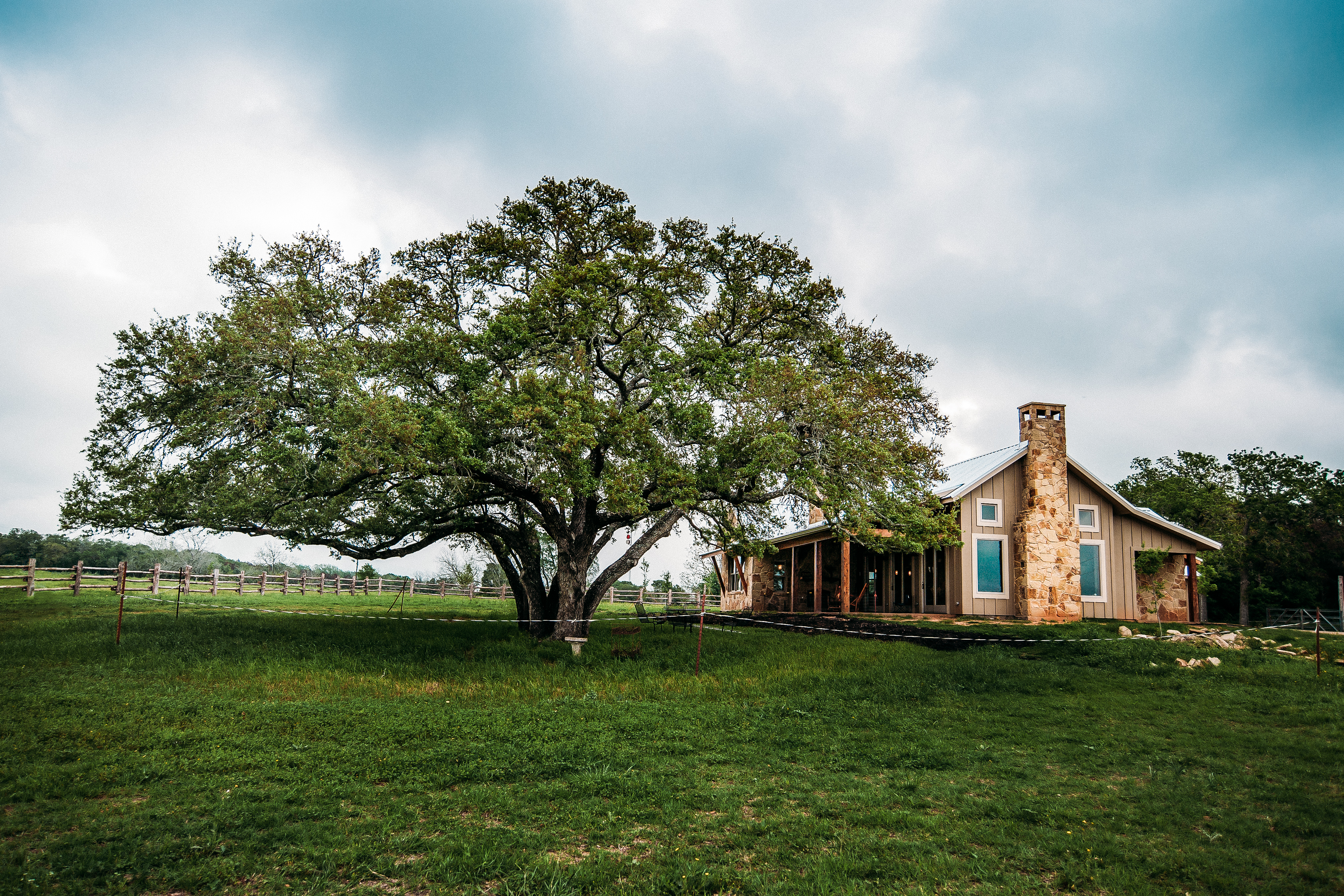
At J. Bryant Boyd, we have designed and built custom homes across Central Texas for more than 30 years. Our architects and builders are the same team, so the number you receive at the first meeting is the number you can build to. Our new home construction services cover each phase from site evaluation through final finishes, and our design-build process keeps every decision connected to your budget.
See the homes we have built for families across the Hill Country in our Portfolio.
Get your custom home started
Connect with our team to tell us about the home you want to build.